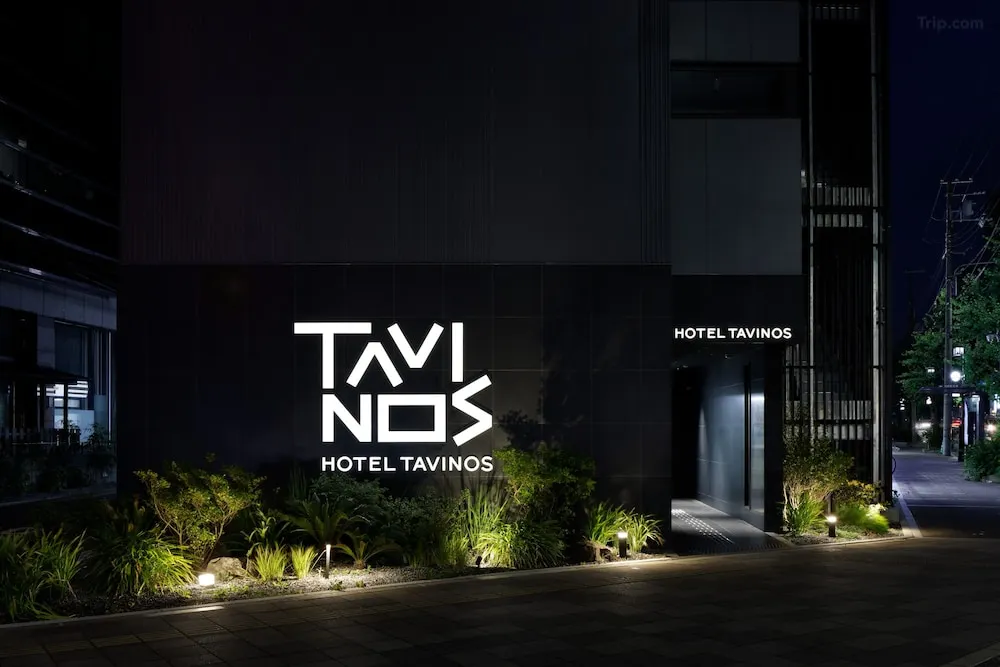
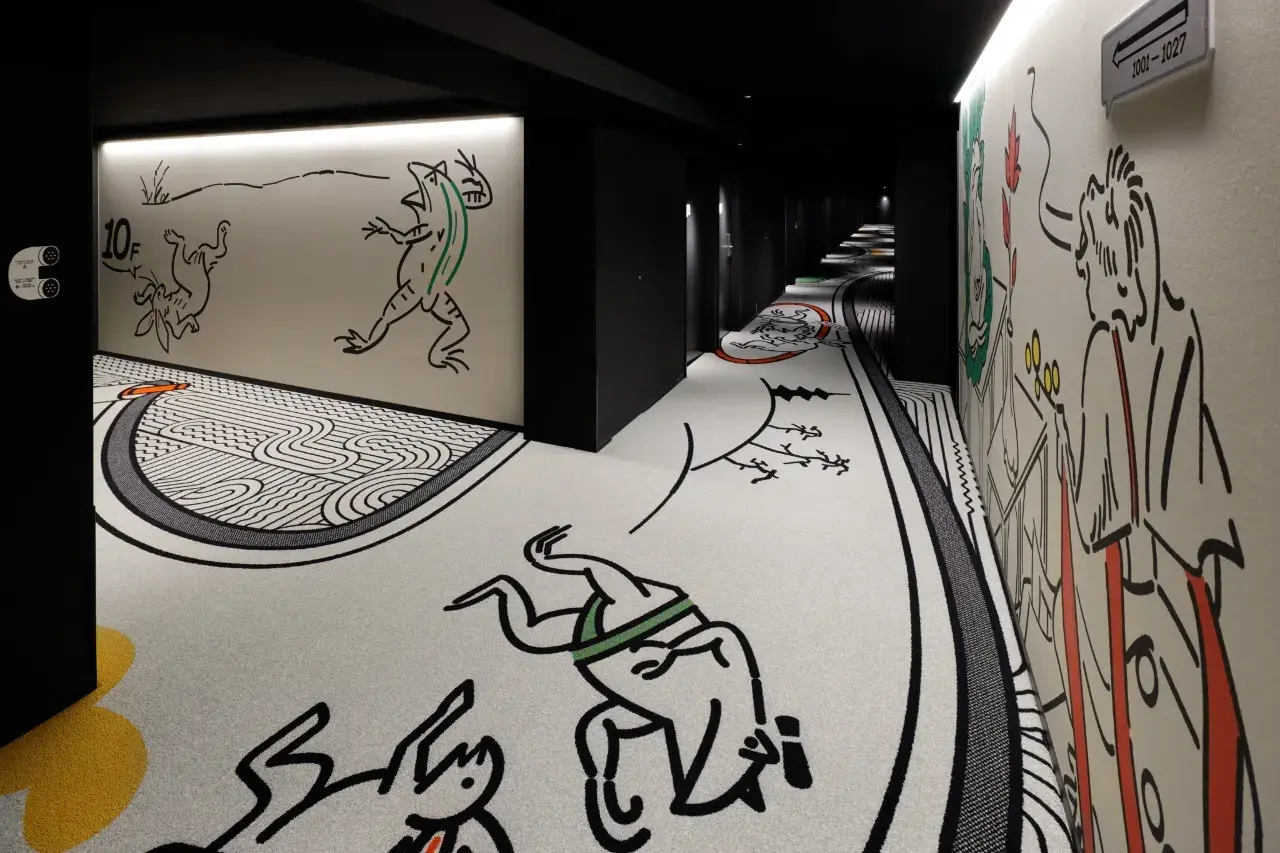
You open the door to your room at Hotel Tavinos Kyoto and it takes a moment to process: the walls, the bedding, every surface is covered in bold manga-style illustration. Not generic decoration — a specific design system. The sumo room wraps you in woodblock-style wrestlers and tournament imagery. The public bath room gives you sento tile-work patterns and noren curtain motifs floor to ceiling. The moon-viewing room places you inside a scene of autumn foliage, full moon, and contemplative figures on verandas. Each room is a different Japan, drawn in two dimensions, and you don't know which one you'll get until the door swings open.
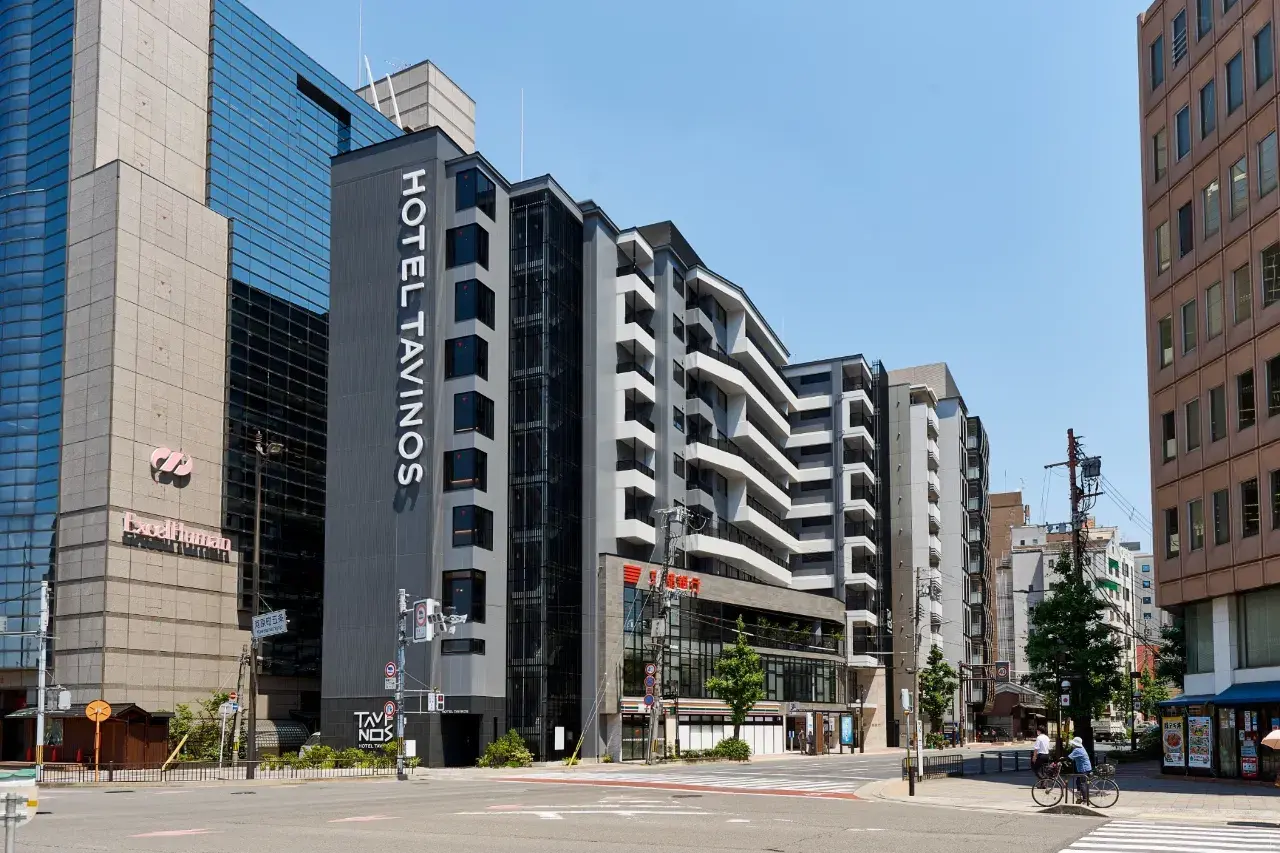
This is the Fujita Kanko Group's manga hotel concept, executed in a location that makes it the natural base for Kyoto's portion of the Demon Slayer pilgrimage. Hotel Tavinos Kyoto opened in 2021, three minutes on foot from Kiyomizu-gojo Station on the Keihan Main Line — the same line that connects directly to Kyoto Railway Museum in Shimogyo Ward, home of the preserved Class 8620 steam locomotive that is the real-world Mugen Train. The pilgrimage logistics from this hotel are clean: board the Keihan Line at Kiyomizu-gojo, ride one stop to Tofukuji, transfer to the JR Nara Line, one more stop to Tofukuji, and from there the museum is a short walk. The locomotive and the manga hotel are on the same train line.
The Rooms: Three Manga Designs, One Mystery
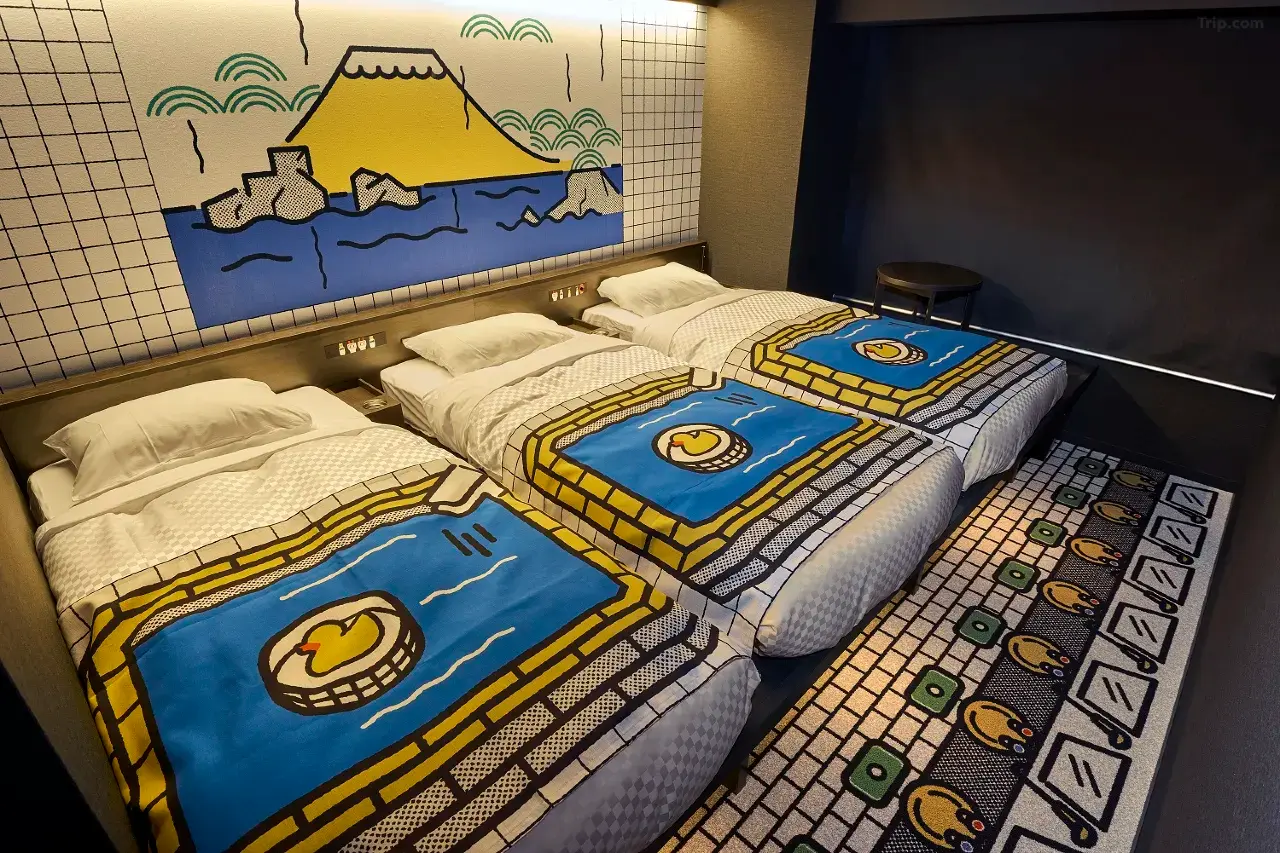
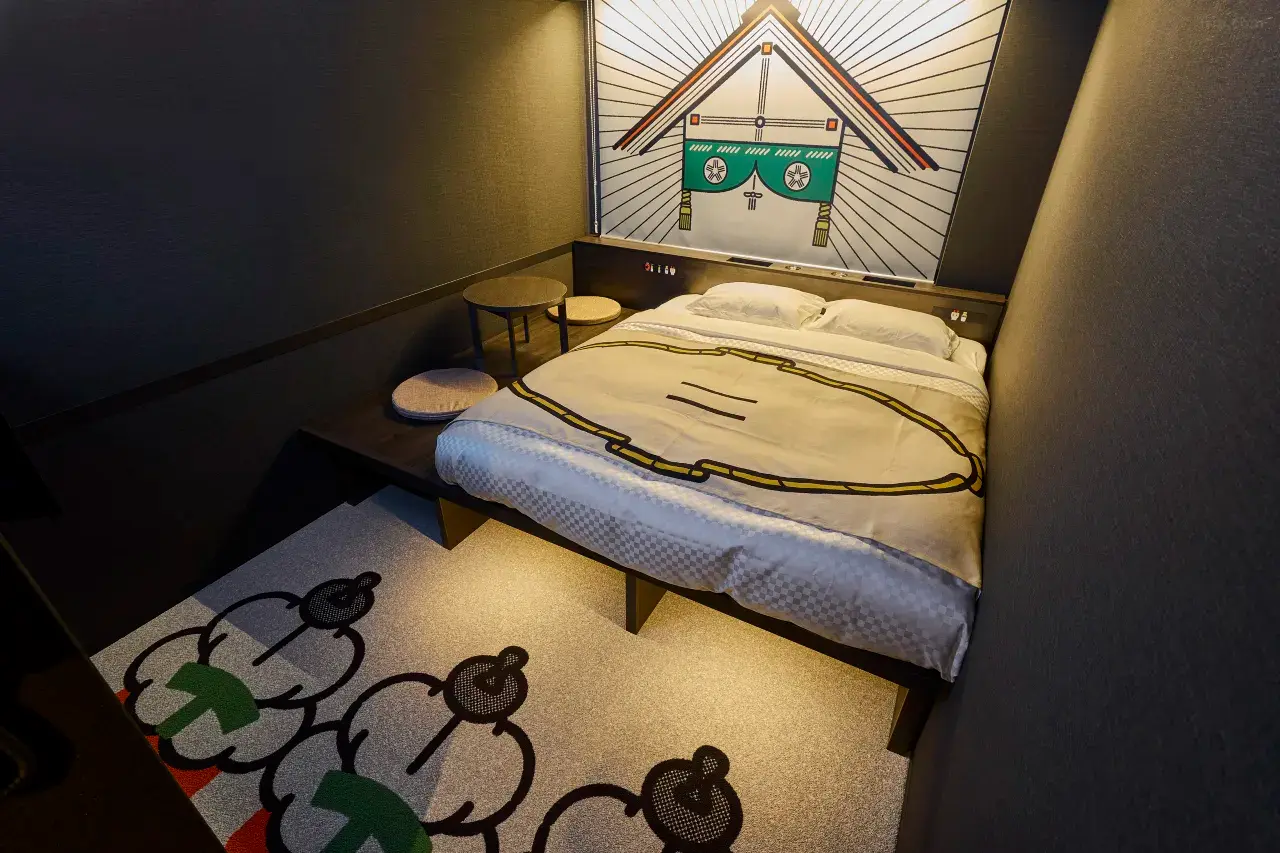
The room assignment at Hotel Tavinos Kyoto is part of the experience. The three design themes — sumo (相撲), public bath (銭湯), and moon-viewing (月見) — are distributed across the hotel's seven room types without pre-selection. You request your room type (Hollywood Twin, Double, Triple, Economy Triple with bunk beds, Universal, or Connecting) and the design theme is revealed at check-in. This is a deliberate choice by the Fujita Kanko design team, and it works: the element of surprise transforms what would be a passive aesthetic into an active one.
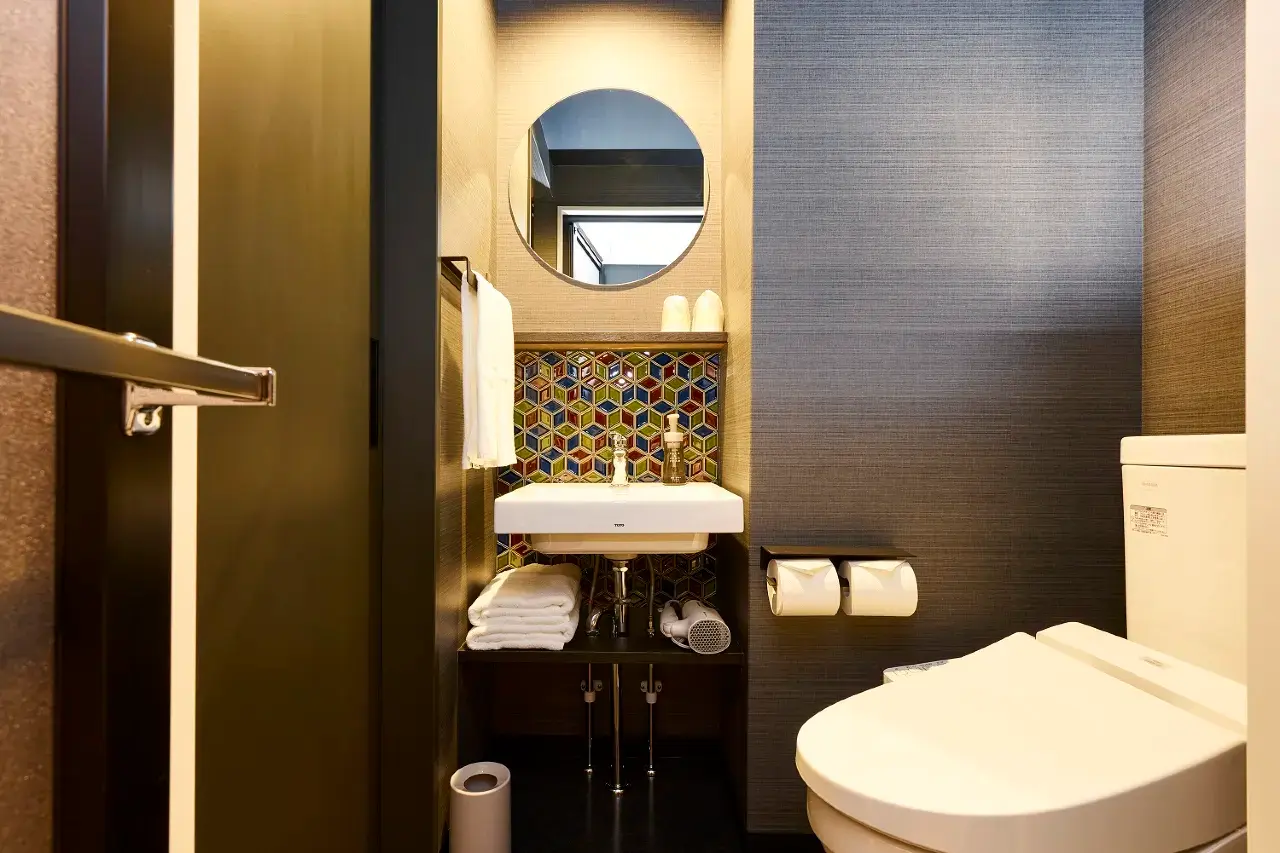
The rooms are compact — 14 to 20 square meters, standard for a Kyoto hotel at this price point — but efficiently designed. Under-bed storage accommodates full suitcases, eliminating the clutter problem that plagues small Japanese hotel rooms. Magniflex mattresses (an Italian ergonomic brand used in premium Japanese hotels) provide sleep quality above the room rate's expectation. Each room has a TV, refrigerator, bidet, private shower booth, bedside USB charging, and individual climate control. A 7-Eleven convenience store occupies the hotel's ground floor — the most practically useful amenity a Kyoto hotel can offer.
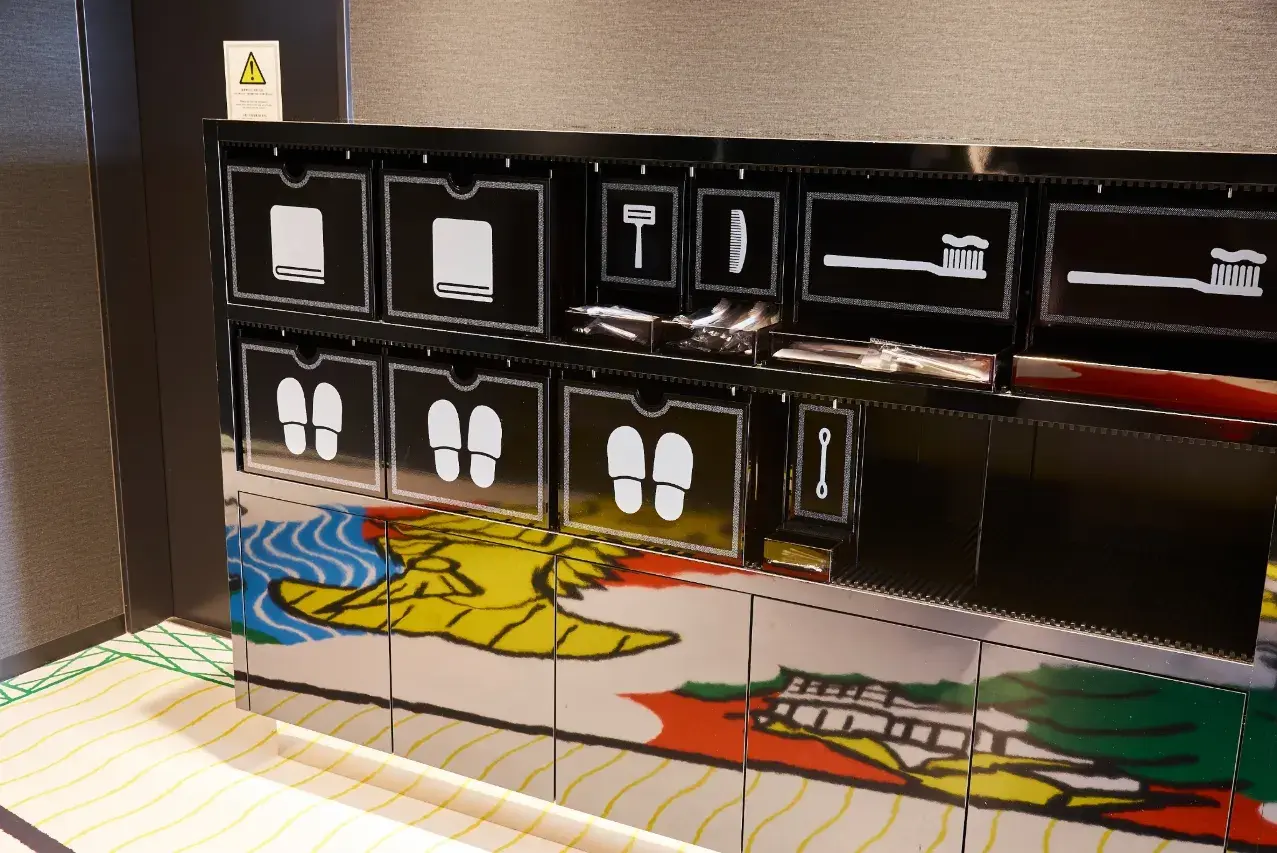
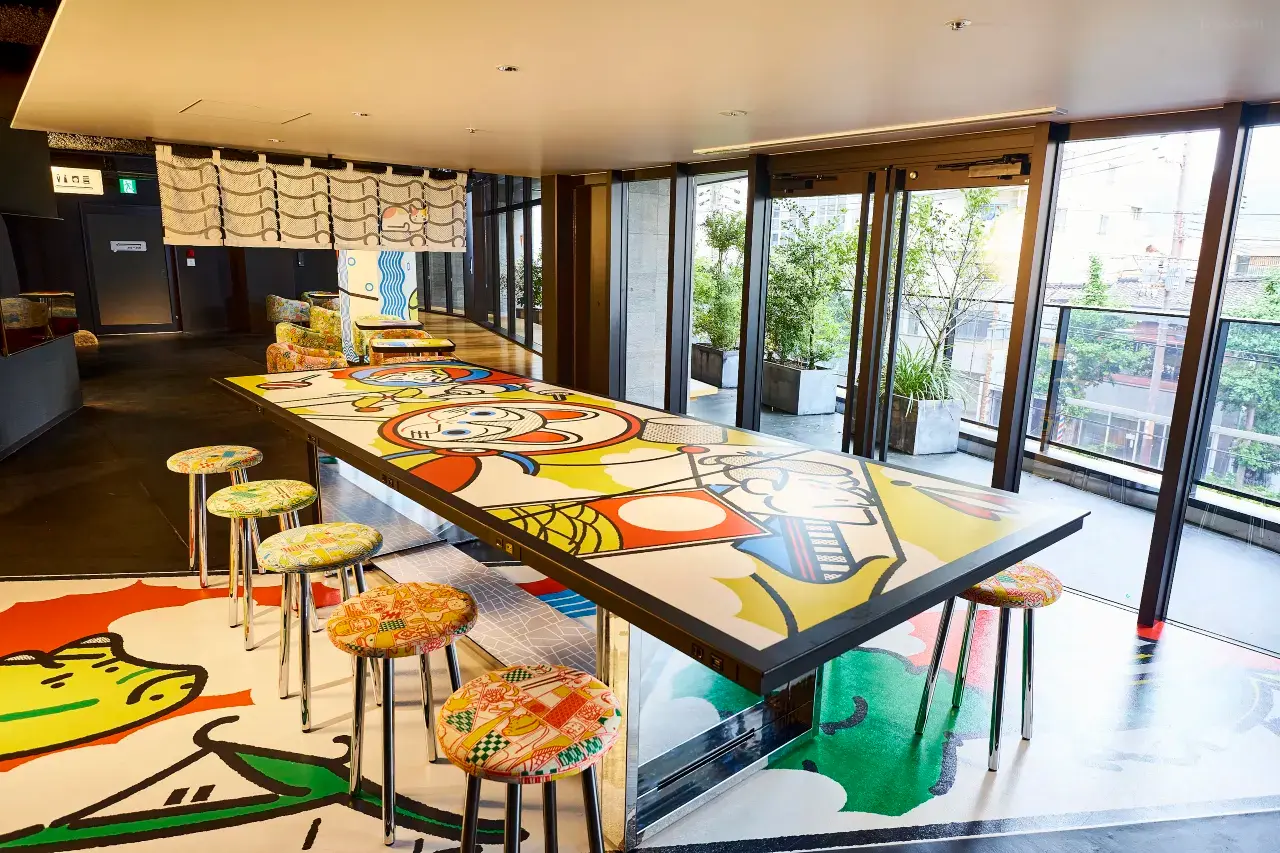
The third-floor lobby operates on a self-service model: automated check-in and check-out machines, self-service luggage storage boxes, and a manga reading lounge with a selection available for borrowing. A social lounge and terrace serve as gathering space. Multilingual staff (Japanese, English, Korean, Chinese) are available for assistance. The overall atmosphere is that of a hotel that respects the traveler's time and autonomy while surrounding them with enough visual energy to make the stay memorable rather than merely functional.
Kyoto Railway Museum: The Mugen Train is 15 Minutes Away
Kyoto Railway Museum in Shimogyo Ward houses the JGR Class 8620 steam locomotive — engine number 8630, built in 1914, the specific model that served as the visual blueprint for the Mugen Train in Demon Slayer: Mugen Train Arc. The museum is open daily except Wednesdays, from 10 AM to 5:30 PM, with admission of approximately ¥1,500 for adults. The locomotive is displayed in the central engine hall; visitors can walk its full length, stand beside the cab, and examine the mechanical detail of a machine that represented the absolute peak of Japanese domestic engineering when Tanjiro Kamado would have been alive.
From Hotel Tavinos Kyoto, the route is straightforward: three minutes on foot to Kiyomizu-gojo Station, Keihan Main Line to Tofukuji Station, transfer to JR Nara Line, one stop to Hachijo-guchi, then a 15-minute walk to the museum — or take Bus 103 or 104 from Kyoto Station to Umekoji-Kyotonishi Station on the San-in Line, which puts you directly at the museum entrance. The total transit time is approximately 20 to 25 minutes. The museum is also accessible on foot from Kyoto Station in approximately 15 minutes for those who prefer to walk.
Beyond the Mugen Train connection, Kyoto Railway Museum is worth the visit on its own terms: over 53 railway vehicles spanning Japanese rail history, a working roundhouse with steam locomotive demonstrations on weekends, and the SL Hiroba outdoor exhibit where additional steam engines are displayed. The museum's scale — it occupies the former Umekoji Steam Locomotive Museum site, significantly expanded — rewards a full morning rather than a quick visit.
The Location: Keihan Line Access and Kyoto's Core
Hotel Tavinos Kyoto's position — between Kyoto Station, the Kawaramachi-Gion downtown district, and the Higashiyama sightseeing corridor — is unusually well-calibrated for a Kyoto pilgrimage. Kiyomizu-dera Temple is a 20-minute walk uphill. Fushimi Inari Shrine is two stops south on the Keihan Main Line. Gion is 10 minutes on foot to the north. The Nishiki Market covered shopping arcade is reachable without transit. For pilgrims combining the Kyoto Railway Museum leg of the Demon Slayer journey with wider Kyoto sightseeing — and the city rewards wider exploration given how much of its mythology feeds into the anime's source material — the location is close to optimal for the price category.
The Keihan Main Line itself deserves a note: it runs parallel to the Kamo River through the center of Kyoto, connecting the city's major cultural sites from Fushimi Inari in the south to Demachiyanagi in the north. A day spent riding the Keihan between pilgrimage sites, with a Tavinos manga room waiting at the end of it, is a Kyoto day that uses the city correctly.
Practical Information
- Check-in: 4:00 PM Check-out: 11:00 AM
- Room designs: Three themes — sumo, public bath (sento), moon-viewing — assigned at check-in
- Room types: Hollywood Twin, Double, Triple, Economy Triple (bunk), Universal, Connecting (up to 6 guests)
- Manga lounge: 3rd floor — borrowable manga selection, self-service check-in, luggage storage
- Nearest station: Kiyomizu-gojo Station (Keihan Main Line) — 3-min walk
- To Kyoto Railway Museum: ~20–25 min via Keihan + JR transfer, or 15-min walk from Kyoto Station
- Ground floor: 7-Eleven convenience store
- Languages: Japanese, English, Korean, Chinese at front desk
- Payment: Cashless only from May 2026 (credit card or QR code)
| Full Name | Hotel Tavinos Kyoto (ホテルタビノス京都) |
| Address | 199 Higashikujo Nishisannocho, Minami Ward, Kyoto 601-8004 |
| Anime Connection | Demon Slayer — base for Kyoto Railway Museum / Mugen Train pilgrimage (Location 09) |
| Opened | July 2021 — Fujita Kanko Group |
| Room Themes | Sumo / Public Bath (Sento) / Moon-Viewing — assigned at check-in |
| Room Size | 14–20 m² depending on type; under-bed suitcase storage |
| Facilities | Manga lounge, self-service check-in, luggage storage, terrace, social lounge |
| Nearest Station | Kiyomizu-gojo Station (Keihan Main Line) — 3-min walk |
| To Mugen Train | ~20 min to Kyoto Railway Museum via Keihan + JR Nara Line transfer |
Photo Gallery
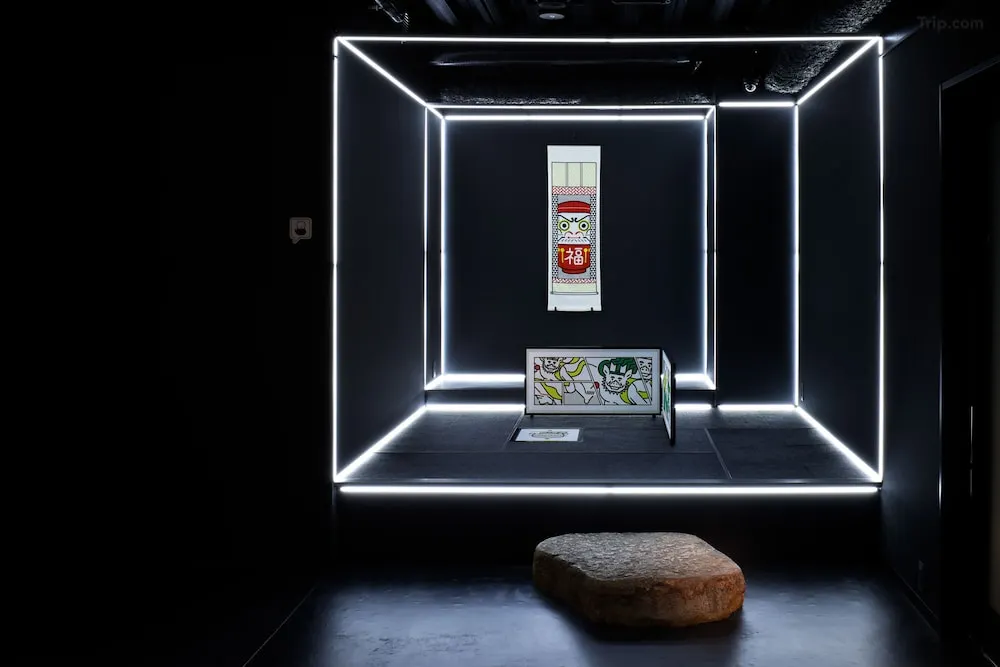
Your Kyoto Manga Base Camp
Three manga room designs. One mystery at check-in. The Mugen Train is 20 minutes away.
Planning the full Demon Slayer pilgrimage? Read the complete guide: Tracing the Blade — Every Real-Life Demon Slayer Location in Japan →
← Back to Stay