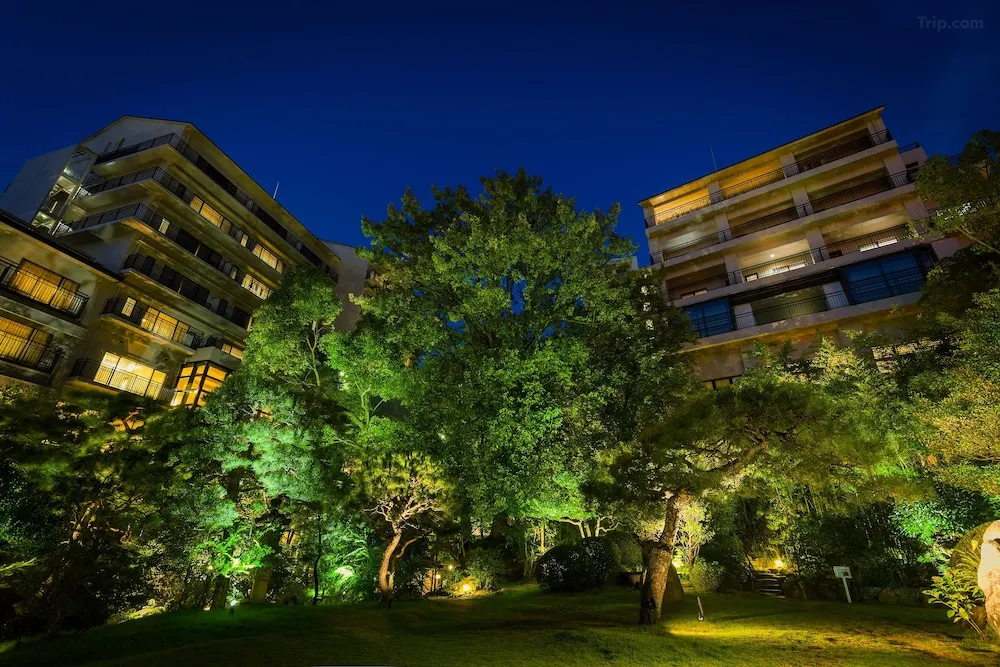
Three minutes on foot from the Spirited Away bathhouse, through the covered arcade of Dogo Onsen's shopping street, past lanterns reflecting in wet stone, there is a ryokan that has been receiving guests since approximately 1627. It has hosted Natsume Soseki, Japan's greatest novelist, who set two of his works here. It has hosted Masaoka Shiki, Matsuyama's most celebrated haiku poet. Emperor Showa stayed here. The baths predate the Edo period. And three minutes away, unchanged in its essential character for over a century, stands the building that Hayao Miyazaki assembled into Yubaba's bathhouse.
Funaya is not the most famous accommodation at Dogo Onsen — that distinction belongs to the Honkan public bathhouse itself, the three-story wooden monument that Miyazaki's team documented during the production of Spirited Away. But the Honkan does not accept overnight guests. Funaya does. And staying at Funaya means waking before the morning crowds, walking to the Honkan before 6 AM when the Tokidaiko drum is struck to open the baths, and arriving at the most recognizable building in anime tourism before anyone else is there.
Four Hundred Years of the Same Water
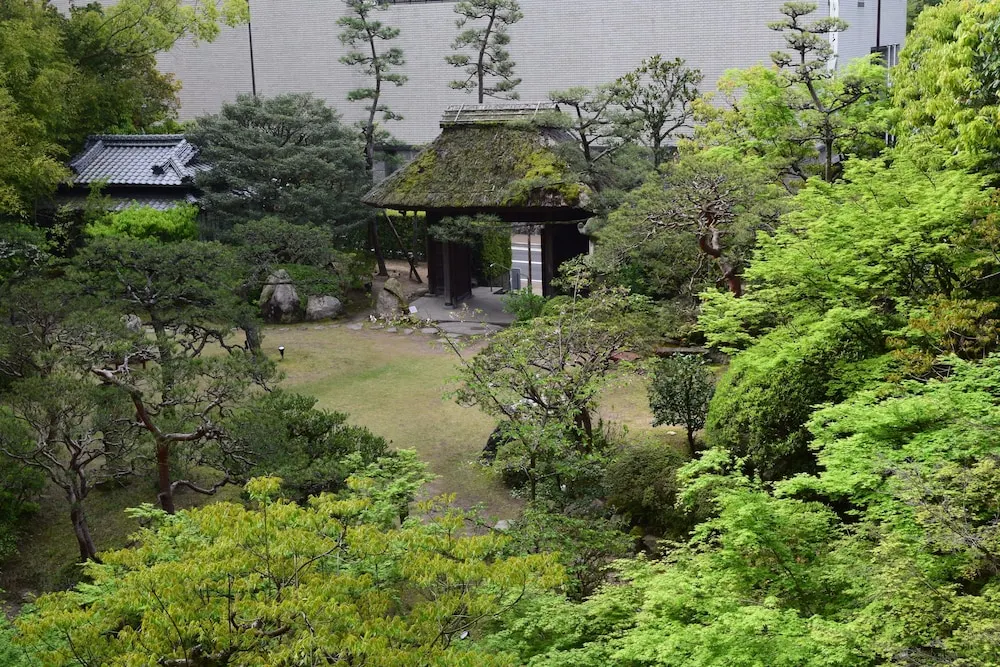
Funaya's founding date is recorded as approximately 1627 — the early Edo period, when Dogo Onsen had already been flowing for what the local legends describe as three thousand years. The spring is among the oldest documented in Japan: it appears in the Nihon Shoki, the eighth-century chronicle of Japanese history, and in the Man'yōshū, Japan's oldest poetry anthology. The Emperor Jomei is said to have bathed here in 631 AD. By the time Funaya opened its doors, the spring had already been running for a millennium.
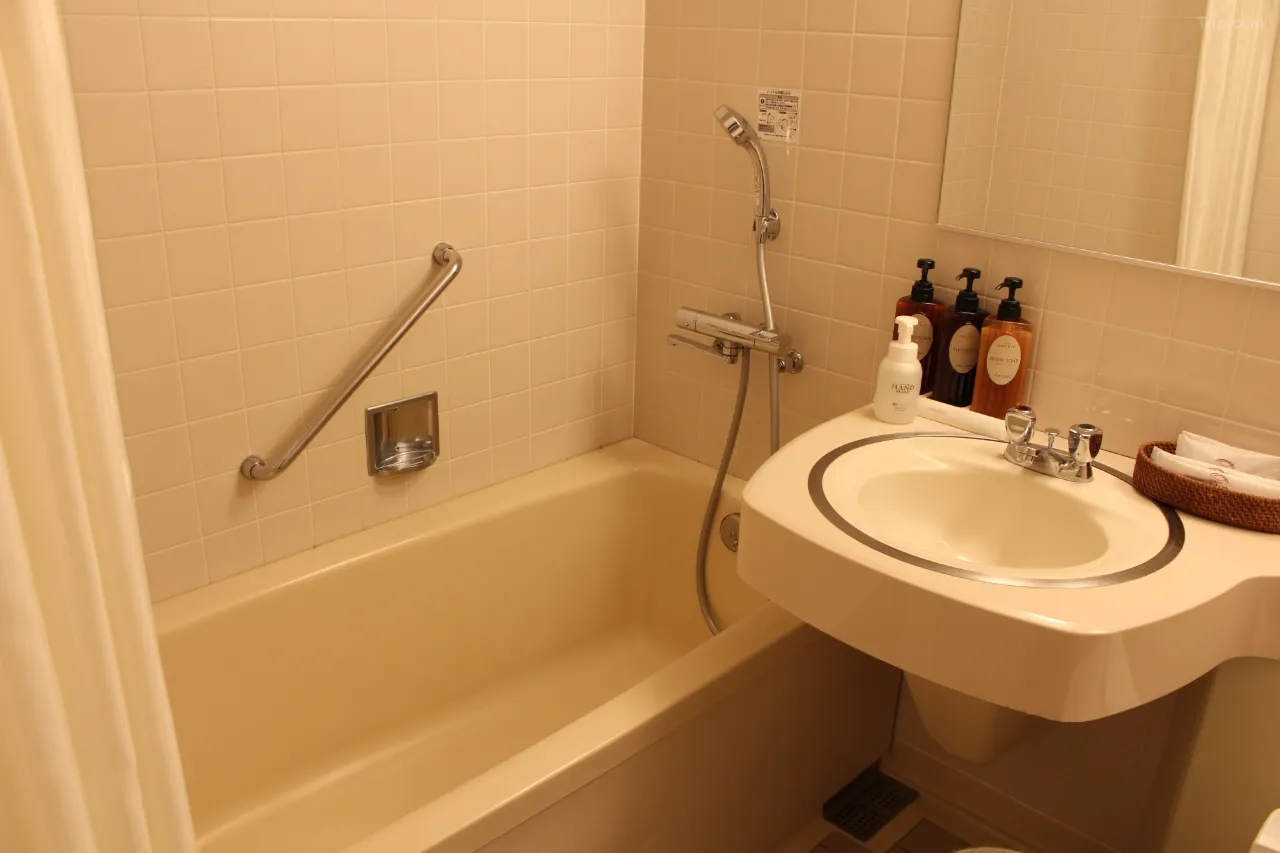
The current property spans 58 rooms across multiple categories — Japanese-style sukiya-zukuri rooms, standard tatami rooms, Japanese-Western hybrids, and Western-style accommodation — all oriented toward a garden of approximately 5,000 square meters. The garden is the ryokan's quiet signature: 200 species of plants across a landscape built around the small river that runs through the center of the property. From spring through autumn, dinner can be taken at tables positioned beside the river, with fireflies appearing in early summer and the seasonal rhythm of the garden shifting behind each course.
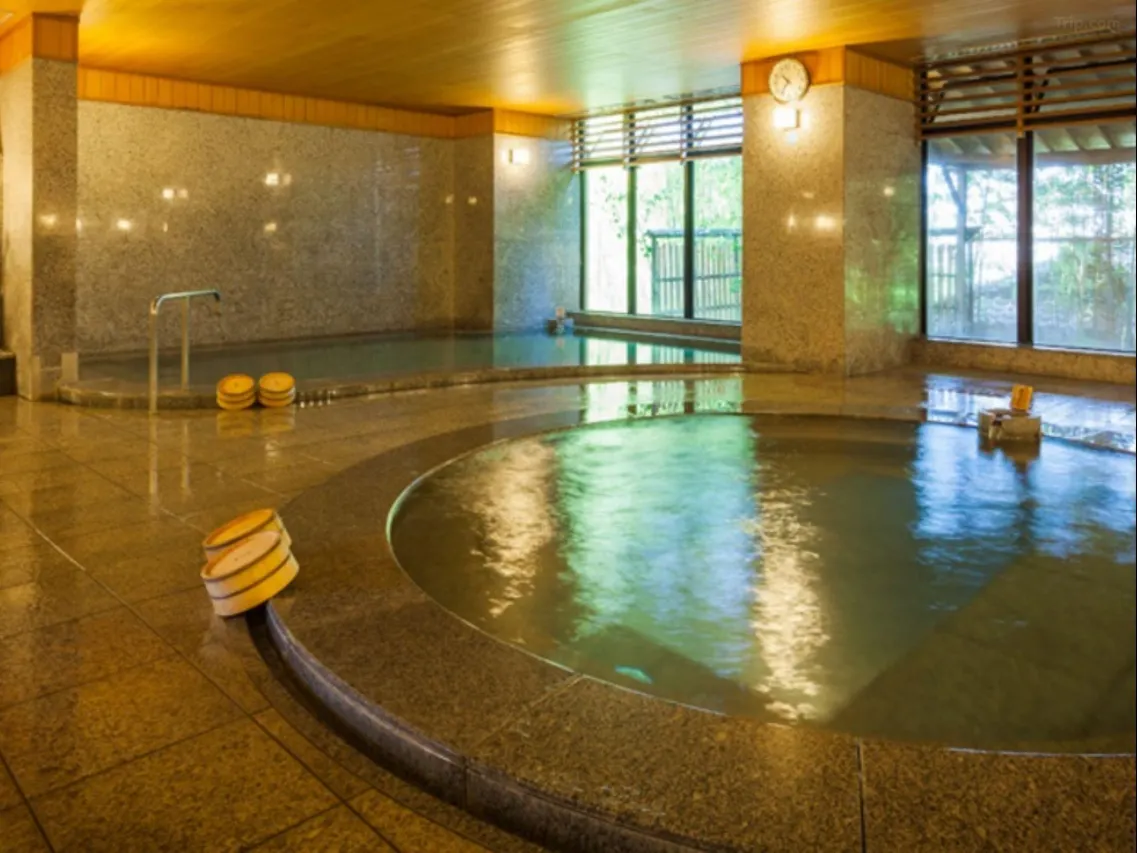
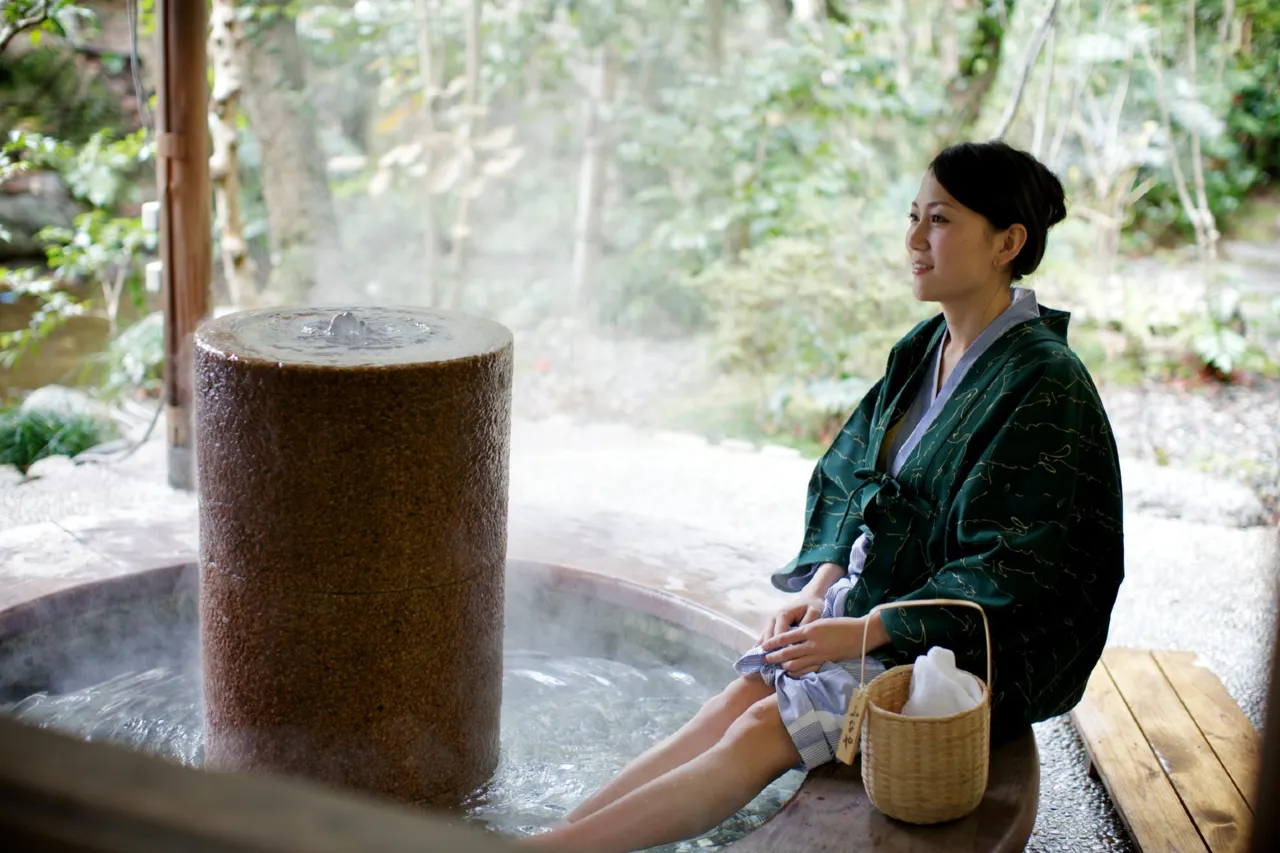
The baths draw from the same Dogo spring that has served this town since before written Japanese history. Two large communal baths operate with alternating gender access: Hinoki-yu, a cypress bath whose wood releases a resinous warmth into the steam, and Mikage-yu, a granite bath built from Iyo Oshima stone. The mineral composition is a simple alkaline spring — clear, slightly viscous, neutral in smell — described in every century of Japanese literature as beneficial to the skin and recuperative for the body.
Soseki, Shiki, and the Literary Tradition of Dogo
Natsume Soseki arrived at Dogo Onsen in 1895, newly appointed as an English teacher at the Matsuyama Middle School. He was 28, and not yet the writer who would produce Kokoro and I Am a Cat. His time in Matsuyama lasted one year and produced Botchan — a satirical novel set in the city, with the Dogo Onsen baths appearing under their real name as the retreat where the protagonist escapes provincial frustration. The novel is still read in every Japanese school. Soseki's fillet steak, a dish he apparently favored during his stay, remains on Funaya's menu.
Masaoka Shiki was Matsuyama's own — born here in 1867, he returned repeatedly during the latter part of his life when tuberculosis had begun to limit his movements. His haiku from the Dogo Onsen period document the specific quality of light in the arcade at different hours, the sound of the Tokidaiko drum at dawn, the sensation of stepping from cold air into a warm bath as medical fact rather than pleasure. He and Soseki were friends and corresponded extensively during Soseki's Matsuyama year. The literary weight of Dogo Onsen is not a marketing invention. It is documented in the work of two of Japan's most important writers.
The Pilgrimage from Funaya's Front Door
The Dogo Onsen pilgrimage begins before most guests have had breakfast. The Tokidaiko drum at the Honkan is struck at 6 AM to signal the opening of the baths — a ceremony performed every morning for over a century. At this hour, in the minutes before the arcade fills with day visitors arriving by tram from central Matsuyama, the Honkan stands essentially alone in the morning light. This is when its resemblance to Yubaba's bathhouse is most complete: steam rising through the wooden gable vents, the stone approach empty and glistening, the three-tiered roof catching the early light against the sky.
The covered shopping arcade running to the Honkan is the direct spatial model for the food stall street in Spirited Away's opening sequence, where Chihiro's parents gorge themselves on spirit world food before transforming. Walking it at dusk, with lanterns illuminating storefronts selling Botchan dango and sudachi citrus products, the resemblance requires no imagination to complete. The combination of Dogo Onsen Honkan and Shimonada Station — the sea railway platform from Spirited Away, accessible in approximately 40 minutes by JR Yosan Line from Matsuyama — makes Ehime Prefecture the most efficient Spirited Away pilgrimage base in Japan.
A Night at Funaya: Structure and Expectations
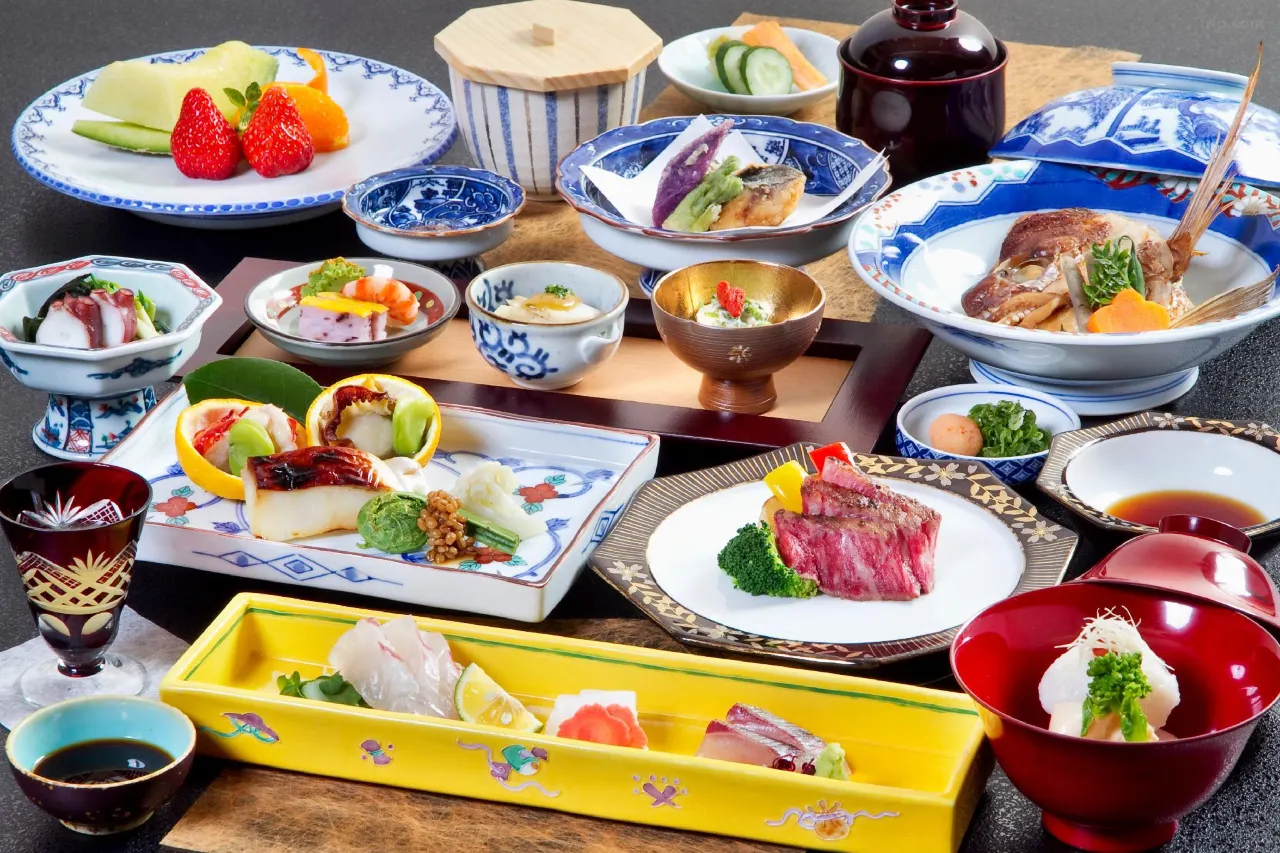
Stays operate on the full-board ryokan format: arrival in the mid-afternoon, yukata and tabi socks at check-in, evening bath before dinner, kaiseki dinner either in-room or in the communal dining hall, breakfast the following morning. Funaya's kitchen draws from the Setouchi sea to the north and the agricultural interior of Ehime — Jyako-ten, the local fish paste tempura specific to Matsuyama, appears regularly alongside fresh river fish and seasonal mountain vegetables. The kaiseki dinner in a tatami room, with the garden visible through a shoji screen, is the experience this ryokan was built to provide.
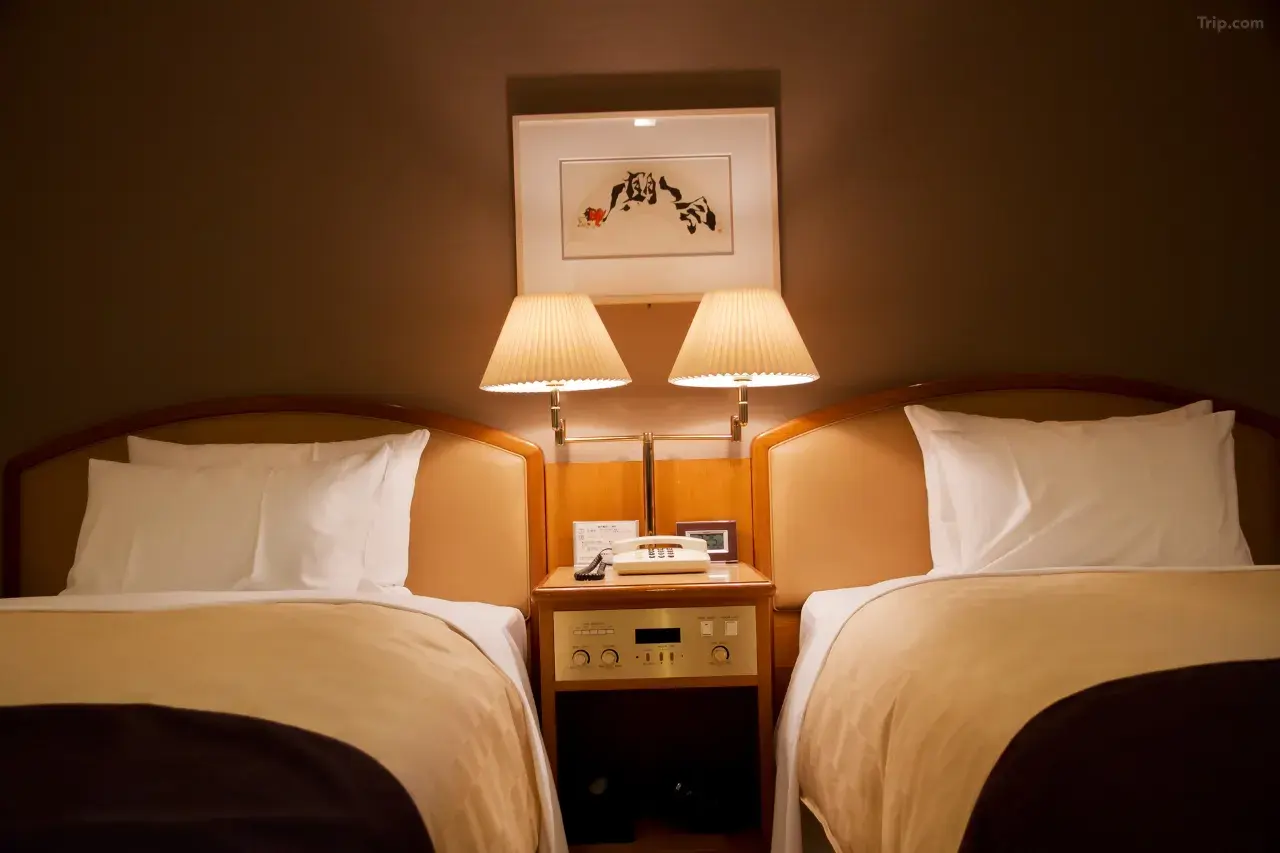
Room selection matters. The sukiya-zukuri rooms are the most architecturally significant, with traditional joinery and paper screens that admit a diffused light that changes quality across the day. Garden-facing rooms with the river view are the most requested — book these specifically, and early, particularly for the firefly season in early summer and autumn foliage.
Practical Information
- Check-in: 3:00 PM Check-out: 10:00 AM
- Meals: Dinner and breakfast included in most plans
- Baths: Hinoki-yu (cypress) and Mikage-yu (Iyo Oshima granite) — alternating gender access
- Best time to visit: Spring fireflies (May–Jun) · Autumn foliage (Oct–Nov) · any season for Honkan pilgrimage
- From Tokyo by air: Haneda → Matsuyama Airport (~1h 20min) → limousine bus to Dogo Onsen (~40 min) → 3 min on foot
- From Tokyo by rail: Shinkansen to Okayama → Limited Express Shiokaze to Matsuyama (~2h 30min) → Iyotetsu tram to Dogo Onsen (~20 min)
- Dogo Onsen Honkan: Open 6:00 AM–11:00 PM — 3 min walk. Arrive before 6 AM for the Tokidaiko drum ceremony.
- Language: Some English spoken; staff experienced with international guests
- Price range: ¥20,000–¥50,000 per person per night (dinner + breakfast included)
| Location | Dogo Onsen, Matsuyama, Ehime Prefecture, Shikoku |
| Category | Traditional Ryokan (Hot Spring Inn) |
| Anime Connection | Spirited Away — 3 min walk from Dogo Onsen Honkan (confirmed Aburaya inspiration) |
| Founded | c. 1627 — over 400 years of continuous operation |
| Rooms | 58 rooms — sukiya-zukuri, tatami, Japanese-Western, Western |
| Garden | 5,000 m² Japanese garden — 200 plant species, riverside dining in season |
| Hot Springs | Dogo alkaline spring — Hinoki-yu (cypress) + Mikage-yu (Iyo Oshima granite) |
| Price Range | ¥20,000–¥50,000 per person per night (dinner + breakfast) |
| Notable Guests | Natsume Soseki · Masaoka Shiki · Emperor Showa |
| Nearest Station | Dogo Onsen Station (Iyotetsu tram) — 3 min on foot |
Photo Gallery
Stay Three Minutes from the Spirited Away Bathhouse
Check availability at Dogo Onsen Funaya — and book the morning drum ceremony into your itinerary.
Want the full Spirited Away pilgrimage across Japan? Read our complete guide: Through the Tunnel — Every Real-Life Spirited Away Location in Japan →
← Back to Stay